
The Danger Isn't Always The Stranger
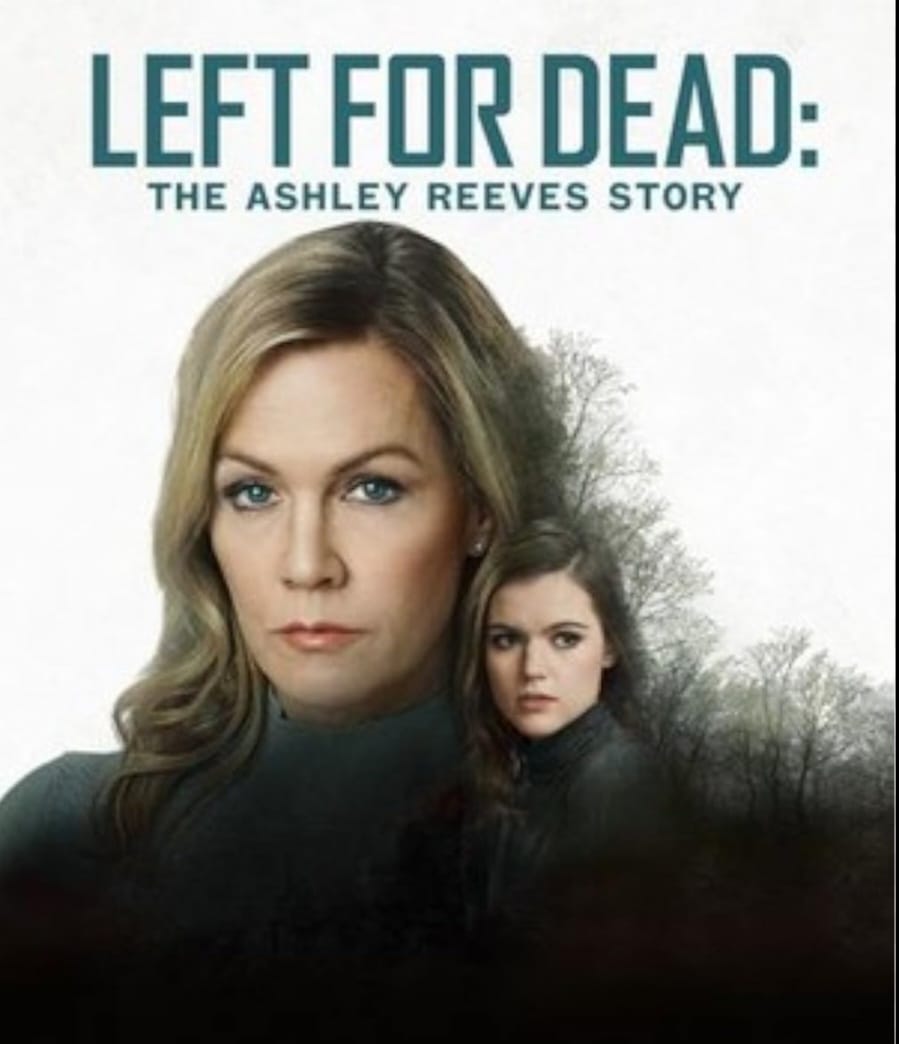
Some nights back, I made my family watch a movie with me. It had been sitting on my "to-watch" list for a while, and I'm so glad we finally saw it together.
The movie was Left for Dead. It's the true story of Ashley Reeves. Watching it took me down a painful memory lane.
As the movie unfolded, I found myself watching my teenage son's reactions almost as much as I watched the screen. Crime thrillers aren't his usual choice. He's more into paranormal and fantasy movies, but this one held his attention.
Then came the climax, and he screamed.
He couldn't believe that a human being could be so cruel, so inhumane, or so utterly monstrous. And when the movie ended, and he realised it was based on a true story, the horror on his face deepened.
That was the moment we had one of those conversations many parents hope their child never has to learn from experience.
The truth is, most people who are abused, manipulated, or harmed are not first hurt by strangers, but by people they know and trust.
People who have earned and gained access to their lives.
That doesn't mean strangers don't cause harm. They do, but we're naturally more cautious around strangers because we expect nothing from them and they haven't earned our trust. The real danger often comes from the people we've stopped being cautious with because we believe they're safe.
Ashley trusted the wrong person.
He wasn't just any man; he was her teacher, someone who was supposed to guide and protect her, and because she kept their relationship secret, he was able to hide his manipulation in the guise of care. He slowly isolated her from her friends and her childhood sweetheart until he had complete control.
By the time anyone realised what was happening, it was almost too late.
Watching Ashley's story reminded me of something I learned very early in life.
Painfully early.
I learned that not everyone who smiles at you means you well. In fact, I learned to be more cautious with people who are naturally quick to smile than with those who seem unfriendly.
I learned that evil people most times wear kindness like a costume, and that predators rarely look like wolves but more like sheep.
I learned that evil was also more likely to be found among trusted adults, close friends, mentors and even family.
I learned to pay attention to what isn't being said, to listen beyond the words and more importantly, to watch the eyes.
People can say the perfect lines, but their eyes often tell a different story. While some may become skilled at masking their intentions, there are moments when the mask slips and their true intentions spills through their eyes.
Watch how people behave when they don't know they're being observed. Pay attention to their body language, learn to read the room, and please, never be secretive about your friendships or relationships. Secrecy creates the perfect hiding place for manipulation.
I learned most of this when I was just six years old. Let me tell you the story that opened my young eyes to these lessons.
I was in Primary two and there was a young teaching assistant in my school, who we called "Small Teacher." It was a nickname my siblings and I gave him because he was not much taller than us; he was small in stature but older.
He had just finished secondary school, and the local government council (where my dad was the Executive Secretary) had employed several young graduates as teaching assistants so they could earn some money before continuing their education.
The first time Small teacher noticed me and my twin brother was on a morning we arrived late for school. He was in charge of punishing latecomers.
He saw our Dad drop us off in his cream-colored Peugeot 504. He asked to be sure if he was our Dad and then let us go to our class without punishment when we confirmed it.
To two little children, that felt like kindness and just like that, we liked him. However, after that day, I noticed something; he always paid more attention to me than to my brother.
Several times, he offered me sweets without offering any to my twin. Each time, I refused because my parents had taught us never to collect gifts from people.
Then came one morning. Our class teacher was absent because she was ill, and another teaching assistant was assigned to our class.
He was the complete opposite of Small Teacher. He was tall, calm and professional in his dealings with us. I liked that so much about him as I was becoming very uncomfortable with the way Small teacher always wanted to touch me whenever he was around me.
During class, Small teacher walked in. He saw me reading in front of the class, and came over and then tried to put his arm around me, but I pulled away.
Even at six years old, I hated being touched that way. I couldn't explain it then, but it made my skin crawl. It made me feel dirty. Somehow, I knew it was inappropriate.
He became visibly angry. Just then, the break bell rang, and he ordered me to stay behind as punishment for "disrespecting" him. My twin brother immediately decided to stay with me, but Small Teacher ordered every pupil, including my brother, out of the classroom.
As my brother reluctantly walked away, he looked back at me and saw the fear in my eyes. Instead of leaving, he stood outside by the classroom window where he could still see inside.
Small teacher noticed.
So he opened the classroom store (a tiny room where learning materials were kept) and ordered me inside to "arrange" it.
As I went into the storeroom, he followed me in and then locked the door.
We were finally alone. Just the two of us.
I looked around the room, everything was already in perfect order. Not a single thing needed arranging.
So, I turned around.
A narrow beam of light streamed through the tiny window and fell across his face as he slowly walked toward me.
I will never forget his eyes.
It wasn't the face of the kind teacher I thought I knew. It was a look no six-year-old should ever have to recognize.
Without thinking, I blurted out the first five words that came to my heart:
"I will tell my father."
Those words changed everything!! His expression changed instantly and he stepped back.
Then, almost nervously, he said,
"Tell your father what? I didn't touch you... please... I didn't touch you."
He hurriedly unlocked the door and let me out.
I ran straight to my brother, who had already come back into the classroom and was waiting by the door.
Even now, decades later, I still ask myself:
What if I hadn't said those words?
What if my brother hadn't refused to leave?
What if we had been somewhere more secluded?
What if he had done what he intended to do?
Would I have become another child whose innocence was stolen?
Would he have tried to silence me afterward, especially knowing who my father was?
We'll never know, and for that, I remain grateful.
Ashley Reeves wasn't attacked by a stranger lurking in the shadows, she was betrayed by a man who should have protected her. A man who abused his position of trust, and then tried to end her life to cover up his own evil.
Her story is heartbreaking.
Mine could have been.
So if there's one lesson I hope every parent, teenager, and young adult takes away from both Ashley's story and mine, it's this:
Not everyone who has access to you deserves your trust.
Teach your children that they can tell you anything.
Teach them that no adult should ever ask them to keep secrets.
Teach them to trust that uneasy feeling when something doesn't seem right.
And if you're the child, the teenager, or even the adult reading this, please don't ignore the voice inside you that whispers, "Something isn't right."
It may just save your life.
0 Comment
No comment yet. Be the first to comment!